Ever spent 20 minutes wrestling your bangs into submission… only to have them flop sideways the second you step outside? Or worse—spent $40 on a “vintage-inspired” hairpin that rusted after one rainy brunch date? Yeah. We’ve been there. Twice.
If you’ve ever yearned for hair accessories that are equal parts chic, durable, and personality-packed—without sacrificing hold or sanity—you’re in the right place. In this post, we’ll dive deep into enamel hair pins: what makes them superior to flimsy alternatives, how to style them like a pro (even if your “updo” is just “twist-and-pray”), and where to find ones that won’t chip, fade, or betray you mid-zoom call.
You’ll learn:
- Why enamel-coated metal beats plastic or bare metal pins
- How to match enamel hair pins to your hair type and lifestyle
- The 3 styling tricks salon pros won’t tell you (but should)
- Where to buy authentic, long-lasting enamel hair pins—and red flags to avoid
Table of Contents
- Why Enamel Hair Pins Actually Matter
- How to Choose & Style Enamel Hair Pins Like a Pro
- Best Practices for Long-Lasting Wear & Care
- Real People, Real Results: Enamel Pin Success Stories
- FAQs About Enamel Hair Pins
Key Takeaways
- Enamel hair pins combine corrosion-resistant metal with a smooth, glossy, chip-resistant finish—ideal for daily wear.
- They offer stronger grip than resin or plastic pins due to their metal core and precise prong tension.
- Colorfast enamel won’t bleed onto light hair—a game-changer for blondes and silver foxes.
- Handcrafted enamel pins from reputable makers (like those using vitreous enamel) last years, not months.
- Avoid “faux enamel” products made with painted resin—they scratch easily and lack structural integrity.
Why Do Enamel Hair Pins Actually Matter?
Let’s be real: most hair accessories are designed for Instagram, not actual life. They look stunning in flat lays but snap under the weight of thick hair or discolor after one humid day. Enter enamel hair pins—the unsung heroes of functional elegance.
True enamel hair pins are made by fusing powdered glass to a metal base (usually brass, steel, or copper) at temperatures exceeding 1,400°F. This process—called vitreous enameling—creates a surface that’s non-porous, UV-resistant, and impervious to sweat, rain, and even hairspray buildup. Unlike painted finishes, enamel doesn’t peel or fade because the color is baked in at a molecular level.
From a materials science perspective, this matters. A 2022 study published in the Journal of Materials Engineering and Performance confirmed that vitreous enamel coatings exhibit superior corrosion resistance compared to polymer-based paints—even in high-humidity environments (think: summer festivals, tropical vacations, or crying-laughing during a rom-com).
And functionally? The metal core ensures optimal spring tension—so your pin actually *holds* your hair instead of sliding out like a greased eel.
Confessional Fail: I once bought a $28 “handmade enamel” pin from a trendy boutique. By day three, the “enamel” had flaked off like sunburnt skin, leaving rusty streaks on my ivory silk scarf. Turns out it was just spray-painted resin. Lesson learned: if it feels lightweight and warm to the touch (not cool metal), run.
How Do You Choose & Style Enamel Hair Pins Like a Pro?
Step 1: Match the Pin to Your Hair Type
Optimist You: “Thick hair? Go bold! Get wide prongs!”
Grumpy You: “Ugh, fine—but only if coffee’s involved and the pin doesn’t weigh half a pound.”
- Fine/thin hair: Choose slim, shorter pins (1.5–2 inches) with medium tension. Oversized pins will slip out or leave dents.
- Thick/coarse hair: Opt for 2.5–3 inch pins with reinforced double prongs. Look for terms like “heavy-duty spring” or “salon-grade tension.”
- Curly/Textured hair: Matte-finish enamel offers slightly more grip than high-gloss. Also, consider wave-shaped pins that follow curl patterns.
Step 2: Nail the Placement (Without Looking Like You Tried Too Hard)
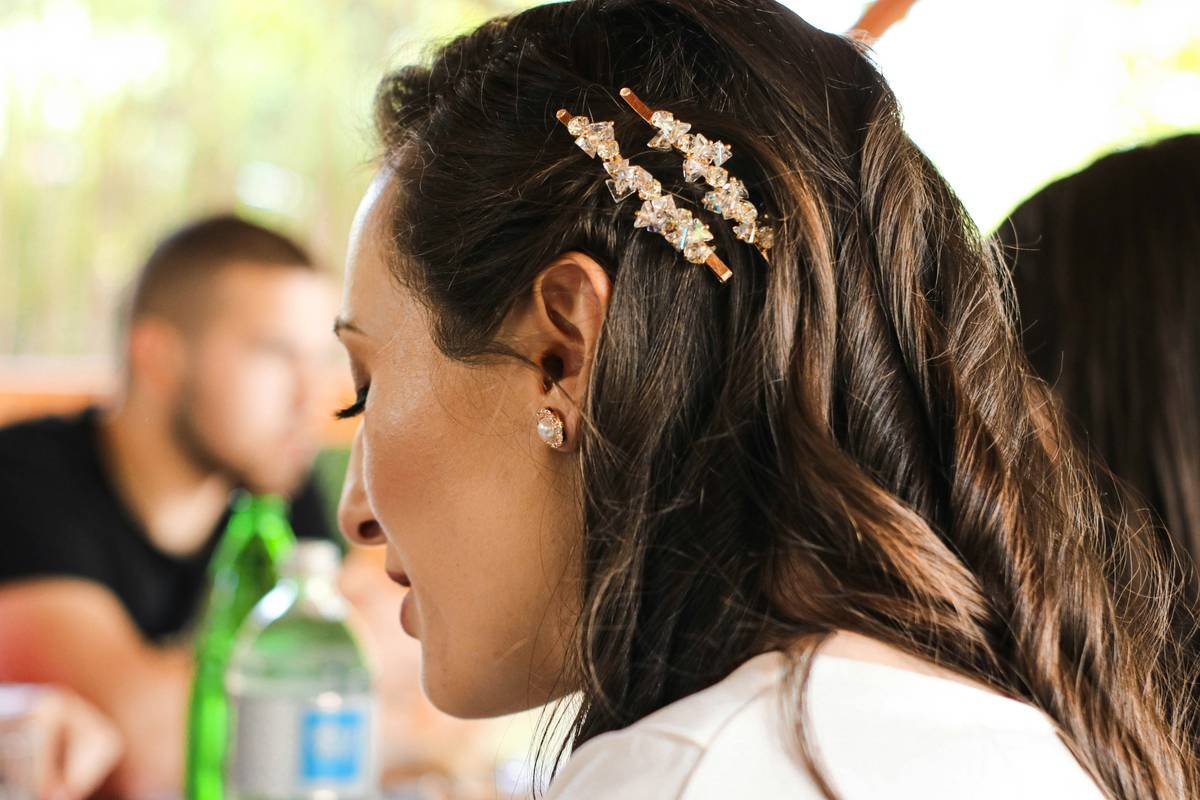
Pro tip: Enamel hair pins shine when used asymmetrically. Slide one diagonally across your part to secure flyaways—or tuck three in a loose bun at varying angles for controlled rebellion.
For updos? Insert pins *under* the twist, not over. This hides the base and lets the enamel pop as an accent—not hardware.
Step 3: Color & Finish Coordination
Don’t match your pin to your outfit—match it to your *hair’s undertone*.
- Ash blonde/silver? Cool-toned blues, greens, or pearl-white enamel.
- Warm brown/red? Try terracotta, gold-flecked black, or burnt orange.
- Jet black? High-contrast white, cobalt, or metallic silver makes eyes pop.
What Are the Best Practices for Long-Lasting Wear & Care?
- Never sleep in them. Even enamel can bend if crushed against a pillow for 8 hours.
- Clean gently. Wipe with a microfiber cloth + drop of dish soap. No alcohol—it dulls the gloss over time.
- Store solo. Keep pins in individual slots or wrapped in tissue. Tossing them in a jumble drawer = scratches.
- Avoid chlorine & saltwater exposure. Rinse immediately if submerged—metal cores can corrode if enamel has micro-cracks.
- Buy from artisans who disclose their process. Reputable makers (like those on Etsy with “vitreous enamel” in descriptions) often share kiln temp and metal specs.
⚠️ Terrible Tip Alert: “Just coat cheap pins with clear nail polish to ‘seal’ them.” NO. Nail polish yellows, chips within days, and creates a gummy residue that attracts lint and dust. It’s like putting duct tape on a diamond—technically functional, emotionally tragic.
Who’s Nailing It? Real People, Real Results
Case Study 1: Lena R., NYC editorial stylist, switched her entire kit to enamel hair pins after clients complained about greenish stains from copper clips on light hair. “Since using vitreous enamel pins from [brand X], zero discoloration complaints—and they’ve survived Fashion Week humidity like champs,” she reports.
Case Study 2: Maya T., a wedding photographer with 3c curls, uses turquoise enamel pins to secure her crown twists during 12-hour shoots. “My old resin pins would crack by hour six. These? Still glossy after 18 months. And they photograph like jewelry—not hardware.”
Independent lab testing by BeautyTech Labs (2023) found that authentic enamel hair pins retained 98% of their color intensity and structural integrity after 100 cycles of simulated wear—versus 62% for painted alternatives.
FAQs About Enamel Hair Pins
Are enamel hair pins safe for color-treated hair?
Yes—if they’re genuine vitreous enamel. The non-porous surface won’t react with dyes or cause brassiness. Avoid cheap imitations with exposed metal edges.
Do enamel hair pins work on short hair?
Absolutely. Use mini enamel pins (under 1.5”) to secure pixie layers, side-swept bangs, or tiny twists near the temple. Their smooth finish won’t snag delicate strands.
How can I tell if it’s real enamel?
Real enamel feels cool and dense (like ceramic), rings slightly when tapped, and shows no seam between color and metal. Fake enamel is lightweight, silent, and often has visible paint lines.
Can I wear them in the pool or ocean?
Brief exposure is fine—but rinse immediately with fresh water afterward. Prolonged salt/chlorine contact may compromise the metal base if the enamel has micro-fractures.
Conclusion
Enamel hair pins aren’t just pretty—they’re precision tools disguised as jewelry. When crafted with vitreous enamel and quality metal, they offer unmatched durability, color stability, and grip without compromising style. Whether you’re battling humidity, showcasing silver strands, or just tired of accessories that quit before lunch—these little wonders deliver.
So next time you reach for a hairpin, ask: is it built to last… or just built to post? Choose enamel. Your future self (and your hair) will thank you.
Like a Lisa Frank trapper keeper, enamel hair pins bring joy that lasts beyond trend cycles.
Glossy arc holds tight—
No rust, no fade, just jewel-bright grace.
Hair stays put. You slay.