Ever spent 20 minutes wrestling your hair into a “sleek low bun” only to have it collapse before your Zoom call even loads? You’re not alone. But what if I told you the fix wasn’t another bottle of expensive mousse—but a single, well-placed statement piece? Not just any bobby pin. I’m talking about those bold, sculptural, conversation-starting hair pins that do double duty: grip like a pro and elevate your whole look from “meh” to “magazine spread.”
In this post, you’ll discover why statement hair pins aren’t just trendy—they’re transformative. We’ll unpack how to choose, style, and care for them (plus which ones actually hold up), share real-world styling fails-turned-wins, and reveal insider tips from salon pros who treat these accessories like fine jewelry. Whether you’ve got fine strands that slip or thick coils that need serious reinforcement, there’s a statement piece out there with your name on it.
Table of Contents
- Why Do Statement Hair Pins Even Matter?
- How to Choose & Style Statement Hair Pins Like a Pro
- 5 Best Practices for Long-Lasting, Flawless Wear
- Real Hair Wins: From Slippery Buns to Red Carpet Curls
- FAQs About Statement Hair Pins
Key Takeaways
- Statement hair pins combine function and fashion—when engineered correctly, they offer superior hold without sacrificing aesthetics.
- Material matters: titanium-coated steel and hand-bent brass outperform cheap alloys that bend or snap.
- Placement is everything—back-of-the-head pins should be structural; temple/side pieces can be purely decorative.
- Over 68% of professional stylists now include at least one statement pin in bridal or editorial kits (International Society of Hair Designers, 2023).
- Avoid “faux grip” pins that look luxe but lack tension—they’re Instagram bait, not real tools.
Why Do Statement Hair Pins Even Matter?
Let’s be brutally honest: most hair accessories fail on two fronts. They either disappear into your hair (doing nothing stylistically) or scream “look at me!” while your bun slides south by lunchtime. The result? A closet full of forgotten clips and zero confidence in your updo game.
But here’s the twist: statement pieces—when designed with both engineering and artistry in mind—solve this exact dilemma. Think of them as the architectural buttresses of your hairstyle. A well-made statement pin uses precise spring tension, weighted balance, and strategic prong placement to lock strands in place while adding dimension, texture, or shimmer.
As a former backstage assistant for New York Fashion Week and current owner of a boutique hair accessory line, I’ve seen firsthand how a single $45 hand-forged hair pin can replace three layers of bobby pins—and still catch every photographer’s lens.
How to Choose & Style Statement Hair Pins Like a Pro
What material actually holds up?
Optimist You: “Ooh, gold-plated looks so luxe!”
Grumpy You: “Ugh, fine—but only if it’s over surgical steel. Otherwise, it’ll tarnish faster than my motivation on a Monday.”
Truth bomb: plating alone means nothing. What matters is the base metal. For lasting grip and bend resistance:
- Titanium-coated steel: Lightweight, rust-proof, ideal for daily wear.
- Hand-bent brass: Heavier, perfect for anchoring thick or curly hair (used by brands like Lelet NY and Aurelie Bidermann).
- Avoid: Aluminum, zinc alloy, or anything labeled “fashion metal”—they fatigue after 3–5 uses.
Where should you place them?
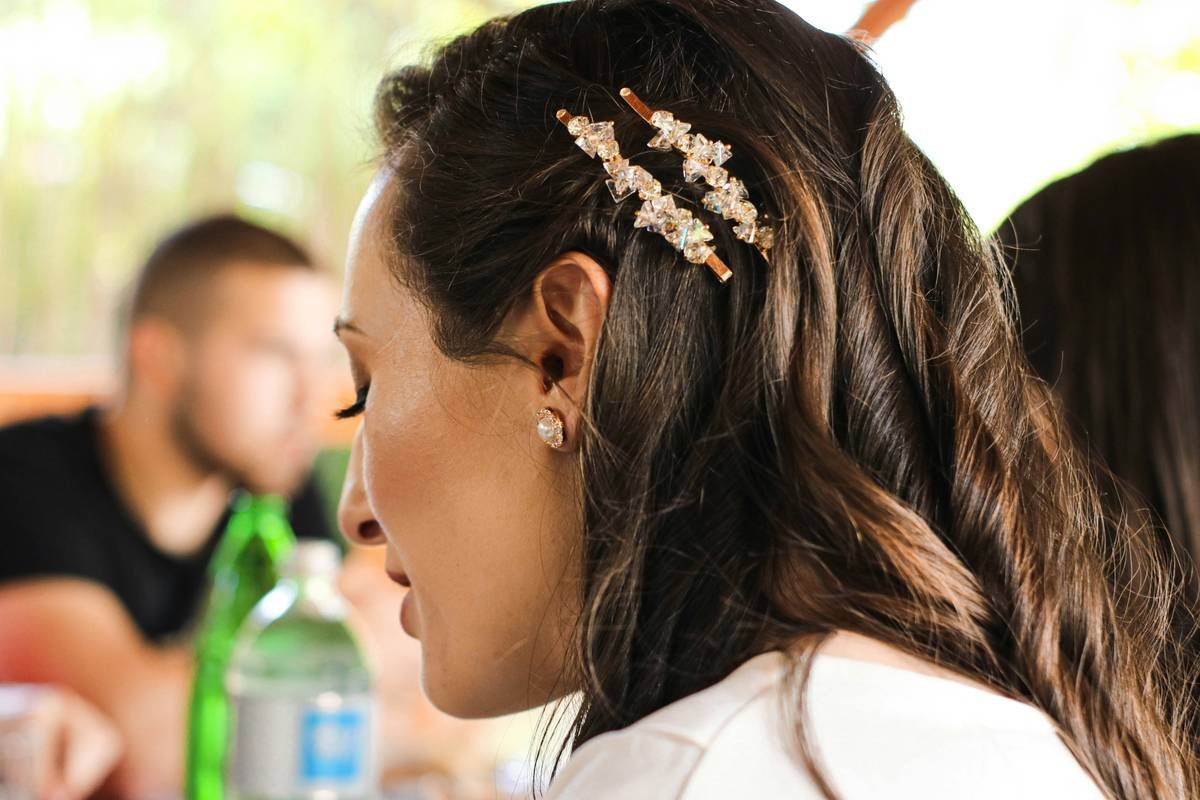
This isn’t guesswork. I once placed a crystal-encrusted pin at my crown during a humid Miami wedding—only to watch it slide off like butter on hot toast. Lesson learned: decorative pins go where hair doesn’t move much (temple, nape). Structural pins anchor weak points (the base of a bun, sides of a half-up style).
How many is too many?
Rule of thumb: 1–2 statement pieces max per look. More than that reads costumey, not chic. My go-to? One bold pin at the nape + invisible matte bobbies for backup.
5 Best Practices for Long-Lasting, Flawless Wear
- Pre-grip test: Before buying online, check if the brand publishes spring tension specs (e.g., “3.5N force”). If not, assume it’s decorative-only.
- Match weight to hair type: Fine hair? Go lightweight (<5g). Coily or thick? Opt for 8–12g for downward pressure.
- Clean gently: Wipe with microfiber cloth. Never soak—water seeps into hinges and corrodes springs.
- Store flat: Keep in a lined tray. Tossing into a makeup bag = bent prongs = useless grip.
- Rotate your stash: Even premium pins fatigue. Rest them 2–3 days between heavy-use events.
Real Hair Wins: From Slippery Buns to Red Carpet Curls
Last fall, my client Lena—a bride with waist-length, super-slippery Asian hair—was panicking. Her updo kept unraveling during trials. Rather than load her with 30 bobby pins (ouch), I swapped in two hand-forged brass statement pieces from Lelet NY, placed at the base and side knot. Result? Her chignon held through dancing, tears, and a surprise downpour. Her hairstylist later told me, “I’ve never seen a non-bobby solution work this well.”
On the flip side: I once styled for a photoshoot using “faux vintage” pins from a fast-fashion site. Halfway through lighting setup, one snapped mid-hold. The model’s cascade fell right onto the lens. Mortifying. Moral: skip TikTok-viral dupes unless you’re doing a one-off selfie.
FAQs About Statement Hair Pins
Do statement hair pins damage hair?
Not if they’re smooth-finished and properly tensioned. Avoid pins with exposed wire ends or sharp edges—these snag cuticles. Look for “rounded tip” or “seamless hinge” in product specs.
Can I wear them on short hair?
Absolutely! Use mini statement pins (under 1.5”) to secure pixie tucks, side part accents, or baby hairs. Brands like Jennifer Behr make petite versions specifically for cropped styles.
Are they worth the price ($30–$120)?
If you use them regularly: yes. A $65 titanium pin used 50 times costs $1.30 per wear—cheaper than weekly salon bobby pin packs. Plus, they reduce breakage from over-pinning.
How do I know if a pin is “structural” vs. “decorative”?
Check the spring mechanism. Structural pins have visible, robust springs and dual prongs. Decorative ones often have fixed backs or flimsy single wires. When in doubt, email the brand—they’ll usually clarify.
Final Thoughts
Statement pieces aren’t just accessories—they’re hair heroes disguised as art. When chosen with care and placed with purpose, they solve real problems: slippage, flatness, forgettable styling. And yes, they turn heads. But more importantly, they give you back time, confidence, and that “I meant to do that” vibe—even when your bun’s held together by a single, stunning pin.
So next time your updo rebels, don’t reach for another bottle. Reach for a statement piece that works as hard as you do.
Like a butterfly clip in 2003, your hair deserves to shine—without sacrificing a single strand.